Micah Allen
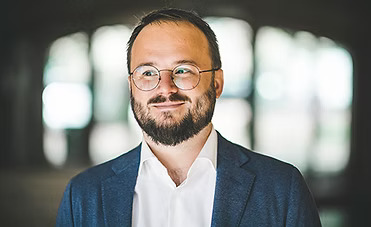
- Professor of Computational Psychiatry, Aarhus University
- Institute of Clinical Medicine
- Honorary Senior Research Fellow, Cambridge Psychiatry
micah@cfin.au.dk
Office
Institute of Clinical Medicine
Aarhus University, Denmark
Dr. Micah Allen is a computational neuroscientist whose research utilises interdisciplinary approaches to understand the mechanisms inter-linking brain-body interaction, interoception, and metacognition. He completed a BSc in experimental psychology at the University of Central Florida, an MA in philosophy and cognitive science at the University of Hertfordshire, and a PhD in health neuroscience at Aarhus University. Afterward, he was a post-doctoral research fellow at University College London and Cambridge Psychiatry. He currently holds a position as a Professor of Computational Psychiatry at the Institute of Clinical Medicine at Aarhus University in Denmark, and is also an Honorary Senior Research Fellow at Cambridge Psychiatry.
Prof. Allen’s research combines computational models with pharmacological and behavioural interventions to understand and remediate deficits of brain-body interaction and self-awareness in psychiatric, health-harming, and neurological disorders. His research lab, the Embodied Computation Group, utilizes methods from computational neuroscience, machine-learning, and perceptual decision-making to address basic, clinical, and applied research questions regarding these and other topics. The lab enjoys a transparent, open-science research ethos; all of our data, code, tools, and other materials are routinely shared (link).
Prof. Allen has received several prestigious research grants, including the ERC Starting Grant and the Lundbeckfonden Fellowship. He is also the recipient of the British Cognitive Neuroscience Early Career Award, a former Fellow of the Aarhus Institute of Advanced Studies, and co-chair of the Brain-Body Interactions Column of the Neuroscience Academy Denmark. In addition to his contributions to neuroscience and computational psychiatry, Prof. Allen is a passionate advocate for open science and has developed several well-recognized open-source tools, including Raincloud Plots, Systole, Cardioception, and the respiratory resistance sensitivity task.